Artex Ceiling Removal Cost UK Explained
Artex ceiling removal cost UK explained clearly – what affects the price, when asbestos testing is needed, and what to expect from safe removal.
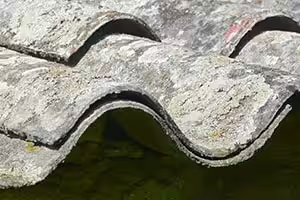
Home-buyers with a preference for older properties are often likely to be lumbered with an additional, unforeseen expense: paying for an asbestos garage roof replacement. While houses from last century can possess some excellent period features, good-sized rooms and a solid structure, they also tend to come with significant quantities of asbestos – and the further back in time you go, the more of it there is.
It’s little surprise, then, that the majority of people who request a quote for the removal of their garage roof own homes typically built in the first half of the twentieth century. What is perhaps more surprising is the number of people who previously had no idea that their garage or outbuilding contained asbestos.
Thanks to the prevalence of asbestos in construction right up until it was banned in 1999, you can usually find some hanging around in pipe lagging, bathroom tiles or making up a garage roof or ceiling. Sadly, wherever it is, it generally needs to be removed, otherwise you run the risk of it posing a major health hazard to you and your family.
Of course, this is not something to try yourself. Removing and replacing an asbestos roof isn’t technically difficult (as a material, asbetos functions in just the same way as many other roofing products) – but it is considerably more dangerous, and you need a license (not to mention the proper equipment and protective clothing) to be able to handle and dispose of asbestos.
Asbestos can be a tricky product to spot. Because it was used so ubiquitously, many people are familiar with its appearance without realising that what they are seeing is a hazardous material. What’s more, asbestos was regularly mixed with other products such as cement and then molded to mimic other, similar products.
The most common garage roof material is corrugated cement known as AIB boards in the trade (see the picture below).
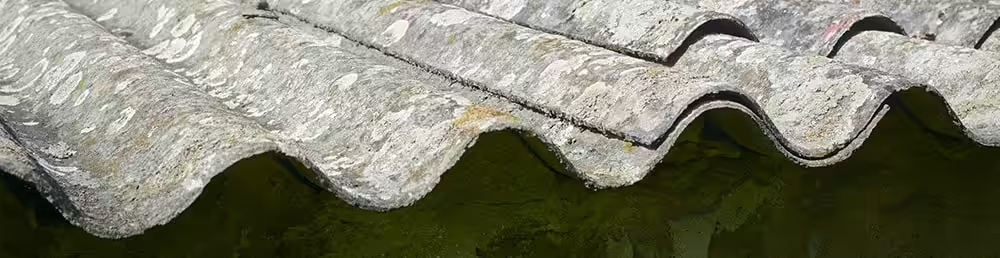
The cement used in this kind of roof construction is quite thin, and will often contain asbestos. If you look more closely at the texture of the cement, you may see thin fibres running through it – this is a clear sign that asbestos has been mixed in with the cement. The cement may also look like it has a texture to it, like fabric.
If your roof looks like it might contain asbestos, it’s worth bearing in mind that the glue used to bind the sheets together may also contain it.
Sometimes, the asbestos is internal, in the garage ceiling. In this case, you’ll be looking out for textured paint (sometimes known as Artex, among other names), or white tiles with the same fibrous texture as you can see in the cement.
You’ll need the experts for this! Avoid using any tools on the roof, or touching it in any way. The slightest disturbance to asbestos releases microscopic fibres into the air – when you breathe them in, they get trapped in your lungs and damage the lining of your lungs and windpipe.
Asbestos removal professionals like JS Removals bring all the specialist equipment and PPE to ensure that our workers are protected from these tiny, harmful fibres. We also make sure we clear up thoroughly after we’ve removed all the asbestos, to get rid of any lingering dust that could still pose a risk. See our costs for asbestos garage roof replacement here.
Then, in accordance with the laws on asbestos removal, you should receive a certificate from the Environment Agency within 14 days of removal, confirming that your asbestos has been legally and safely disposed of.
Then you’re free to get on with whatever renovations or new construction work you like!

Artex ceiling removal cost UK explained clearly – what affects the price, when asbestos testing is needed, and what to expect from safe removal.

How Much Waste Does The UK Produce? As of the last update in January 2022, the UK produced around 220-230 …
Artex ceiling asbestos identification guide for homeowners, landlords and buyers. Learn what to look for, what not to do, and when to test.


